
In April 2026, Verra approved the first issuance of carbon credits under its VM0047 methodology for afforestation, reforestation and revegetation (ARR). The project, Brazil Cerrado 1, received approval for 230,120 Verified Carbon Units (VCUs), marking an important milestone for a methodology designed to quantify carbon removals through changes in tree cover.
The project offers a useful case study in how carbon accounting, land management, project economics and buyer demand intersect. It also raises questions about what makes a carbon removal project commercially viable, how buyers assess quality, and what developers in other markets can learn from the experience.
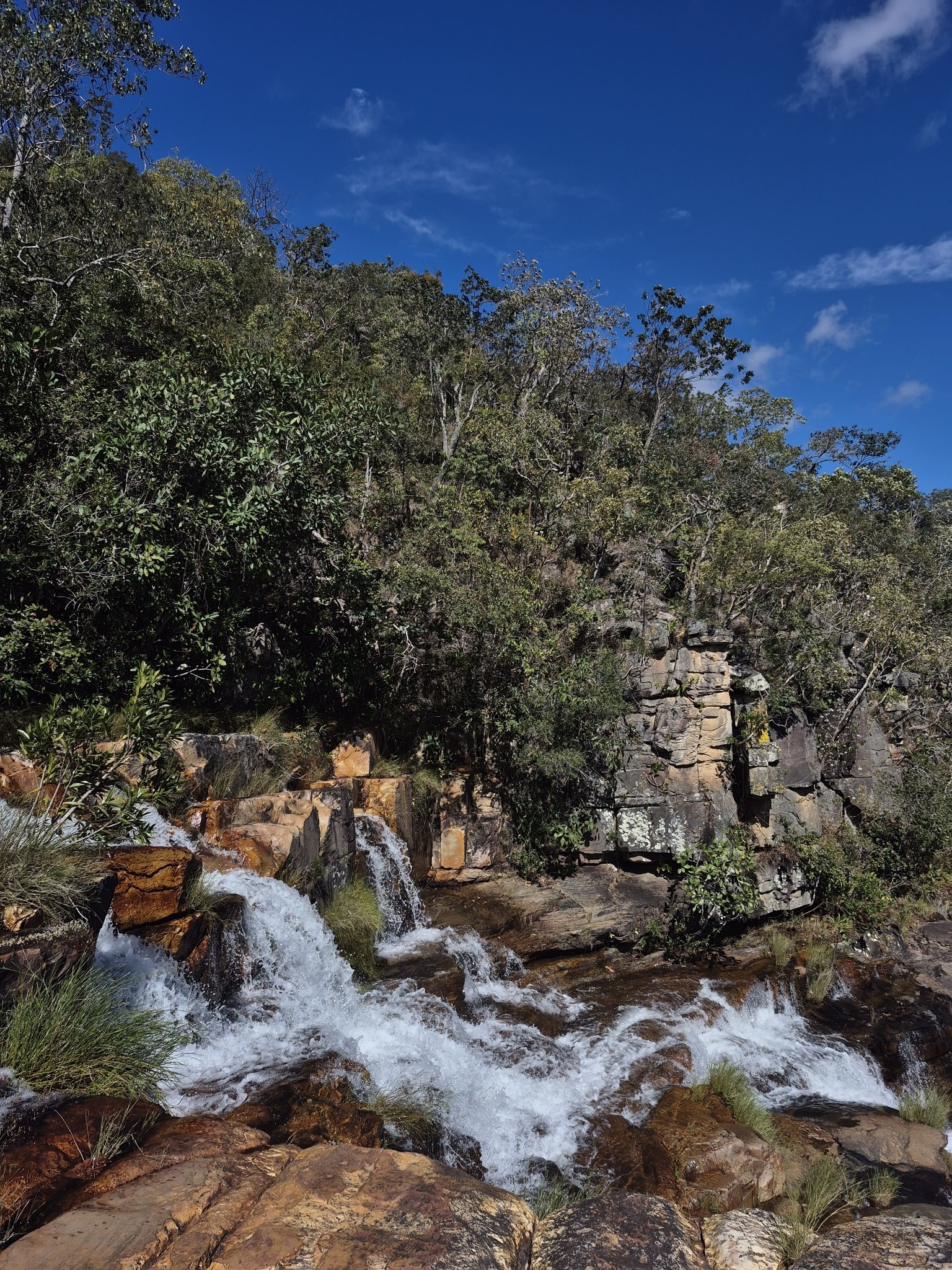
Brazil Cerrado 1 is part of BTG Pactual Timberland Investment Group's Latin American reforestation strategy. Its first project area covers approximately 16,924 hectares of former cattle pasture in Mato Grosso do Sul, Brazil, within the Cerrado, the country’s second-largest biome.
Covering approximately 24% of Brazil’s territory, the Cerrado is one of the world’s most biodiverse savanna regions. It supports a rich diversity of native species and plays an important role in supplying water to major South American river basins. At the same time, extensive conversion of native vegetation for agriculture and pasture has placed significant pressure on the biome.
.png)
Against this backdrop, Brazil Cerrado 1 combines two distinct land-use activities:
Eucalyptus accounts for approximately 83% of the first project’s credited area. Although the wider property includes substantial areas of native vegetation, the distinction between commercial forestry and native ecosystem restoration is important when assessing the project’s environmental outcomes.
The native component includes riparian buffers and restoration areas designed to connect existing native vegetation with newly restored land.
This combination of commercial forestry and native restoration is central to understanding the project’s land-use model, how its carbon removals are generated, and which buyers may be interested in its credits.
The first issuance is significant because it demonstrates that VM0047's area-based approach has passed verification in this project context.
Carbon projects need to do more than demonstrate that trees are growing. They must estimate how much carbon has been removed, account for what would have happened without the project, and provide evidence that can withstand independent scrutiny.
This is where the baseline becomes important.
A baseline estimates the changes in carbon stocks that would be expected in the absence of the project. Without it, a developer cannot reliably distinguish the removals attributable to the intervention from changes that might have occurred anyway.
For Brazil Cerrado 1, the project uses a dynamic performance benchmark informed by remote sensing and field data. The approach compares the project's performance with that of similar areas to estimate expected growth without the intervention.
The underlying question is straightforward:
How much additional carbon removal can reasonably be attributed to the project, rather than to changes that would have occurred anyway?
Answering that question requires more than satellite imagery alone. It depends on the suitability of the reference areas, the assumptions built into the model, the quality of the underlying data and the consistency of the methodology over time.
The verification milestone provides a concrete reference point for developers working with VM0047. It does not, however, mean that every project using the methodology will achieve the same outcome. Each project must demonstrate that its own assumptions, data and implementation meet the applicable requirements.
One of the most important findings in the project documentation is the relationship between carbon revenue and the overall economics of the forestry investment.
According to the project's additionality analysis, including carbon revenue increases its projected internal rate of return (IRR) from 5.3% to 9.9%.
IRR is a measure of the annualised return an investment is expected to generate over time. In simple terms, the analysis suggests that carbon revenue can materially improve the financial attractiveness of the project.
This does not mean that carbon is the project's only source of revenue. Eucalyptus forestry has its own commercial value, while carbon credits offer an additional revenue stream linked to the project's removals.
For project developers and investors, the implication is important: carbon revenue can help make a land-use investment viable under a particular set of assumptions. But that depends on the expected volume of credits, the timing of issuance, the costs of development and verification, and the price buyers are willing to pay.
The project's projected credit volumes also account for the harvesting cycle and a 12% buffer for non-permanence risk. These factors affect how many credits may be issued and when they become available.
The potential value of these removals depends heavily on the price achieved per credit. The scenarios below illustrate how different price assumptions translate into cumulative gross project value over the projected issuance schedule.

These figures are illustrative planning scenarios, not disclosed transaction prices or guaranteed revenues. The project's realised sale price has not been publicly established. Values are gross, before registry fees, sales costs, benefit-sharing and contractual discounts.
Projected credits should not be confused with credits already issued, sold or paid for. The project's first approved issuance was 230,120 VCUs, while the project documentation estimates approximately 6.4 million net VCUs over the full crediting schedule.
Brazil Cerrado 1 also illustrates how large-scale carbon removal projects can secure buyer commitments before their credits are issued.
In 2024, Microsoft and Meta announced agreements with BTG Pactual TIG for future carbon removals under its broader forestry strategy. These commitments were made at portfolio level, rather than specifically against Brazil Cerrado 1.
The agreements demonstrate demand for future removals from a wider project portfolio, but public information does not establish that the first credits issued by Brazil Cerrado 1 were sold directly to either company.
For developers, the broader lesson is that access to capital and buyer demand can be established before every project has completed its issuance process. However, this depends on the credibility of the developer, the quality of the project pipeline, the evidence supporting expected removals and the buyer's confidence in future delivery.
It also highlights the advantage that large, well-capitalised developers may have when building portfolios capable of meeting the volume and delivery requirements of major buyers.
Not all ARR credits command the same price. The RAMO internal market analysis identifies several factors that can influence how buyers assess projects of this kind.
1. Independent quality assessments
Third-party ratings can help buyers compare projects and assess risks. The rating itself is not a guarantee of performance, but it can influence buyer confidence and willingness to pay.
2. The composition of the credited area
Buyers may distinguish between credits generated by native ecosystem restoration and those associated with commercial plantations. A project combining both activities needs to communicate clearly where its credited removals originate and what environmental outcomes each component delivers.
3. The credibility of the baseline
A defensible baseline is central to demonstrating additionality. If the assumptions used to estimate what would have happened without the project are weak, confidence in the resulting credits may also be undermined.
4. Delivery and permanence risks
Buyers need to understand whether projected removals can be delivered over time and how the project manages risks such as fire, harvesting and the reversal of stored carbon.
The internal market analysis uses price scenarios to explore the potential economics of Brazil Cerrado 1. These are planning assumptions, not disclosed transaction prices: the realised sale price of credits from the project has not been publicly established in the material reviewed.
The lessons from Brazil Cerrado 1 are relevant beyond the Brazilian market.
African ARR projects using VM0047 will compete for capital and buyer attention in a market where evidence, project quality and delivery confidence are increasingly important. However, the conditions that make a project viable will vary considerably between landscapes, countries and land-use systems.
For developers working across the Miombo and other African landscapes, the challenge is not simply to estimate how much carbon a project might remove. It is to establish whether the land is suitable, whether the proposed intervention is viable, what risks need to be managed, and what evidence will be required to attract financing and buyers.
In practice, that means addressing several questions early:
These questions have implications for both project costs and timelines. Identifying major constraints early can help developers avoid committing significant resources to projects whose assumptions, land conditions or risks have not been adequately assessed.
Geospatial intelligence and remote sensing can support this early assessment by bringing together information on land cover, biomass, landscape conditions and changes over time. They can also help identify where additional field measurements or more detailed technical studies are needed.
They do not replace field evidence, independent verification or the expertise required to develop a project. Their value lies in helping teams make better-informed decisions about where to focus that work.
Brazil Cerrado 1 provides a concrete example of how land management, carbon accounting, investment structures and buyer demand can come together in a large-scale forestry project.
It also shows why project viability cannot be reduced to a single metric. The volume of potential carbon removals matters, but so do the assumptions behind that estimate, the composition of the project, the risks involved and the ability to demonstrate results credibly.
For developers, the practical challenge is to build that evidence progressively, starting with a clear understanding of the landscape and moving towards the level of detail required for feasibility, financing and verification.
At RAMO Earth, this is the problem we work on: helping nature-based project developers understand land and climate opportunities through geospatial data, remote sensing, predictive modelling and technical analysis.
The objective is not to produce more data for its own sake. It is to help teams identify viable opportunities, understand uncertainty and determine what needs to happen next.
As carbon removal markets mature, the ability to connect landscape intelligence with credible project development will be an increasingly important part of turning potential into projects that can attract capital and deliver measurable outcomes.
This article draws on RAMO Earth’s internal analysis of Brazil Cerrado 1, based on the project description and publicly available market information reviewed in October 2026. Project projections and market scenarios are distinguished from confirmed issuance and disclosed transactions.


