
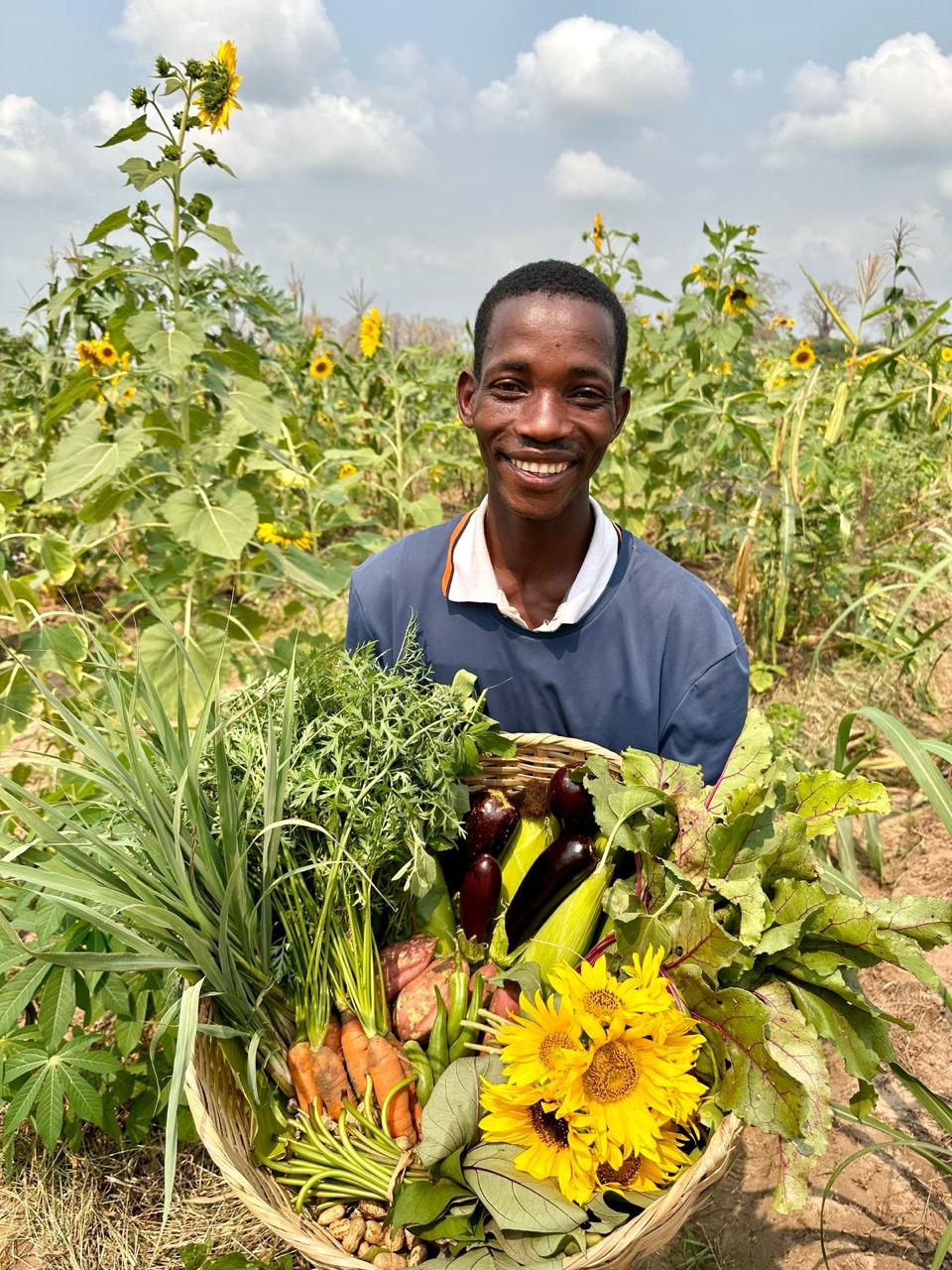
What if food security, rural livelihoods and environmental regeneration could be addressed through the same agricultural system?
In Mazozo, Icolo e Bengo Province, Angola, an agroecological pilot is putting that proposition into practice.
The initiative is being developed through a partnership between the Tony Blair Institute for Global Change (TBI) and the Government of Angola, with the Government represented by the Ministry of Agriculture and Forestry (MINAGRIF) and technical and agronomic implementation through the Instituto de Investigação Agronómica (IIA).
As part of TBI’s Food Security and Climate Resilience Programme, the initiative established the Agricultural Innovation Centre (AIC) as a platform for applied research, demonstration, innovation, and training to support more productive, sustainable, and climate-resilient agricultural systems.
The pilot agroecological system was implemented between May 2024 and May 2025 across 5,760 m² at the Instituto de Investigação Agronómica's Experimental Station in Mazozo, Icolo e Bengo Province, Angola.
At the centre of the approach is Abundant Farming: a way of designing agricultural systems around the conditions of a particular territory and the needs of the families who farm it.
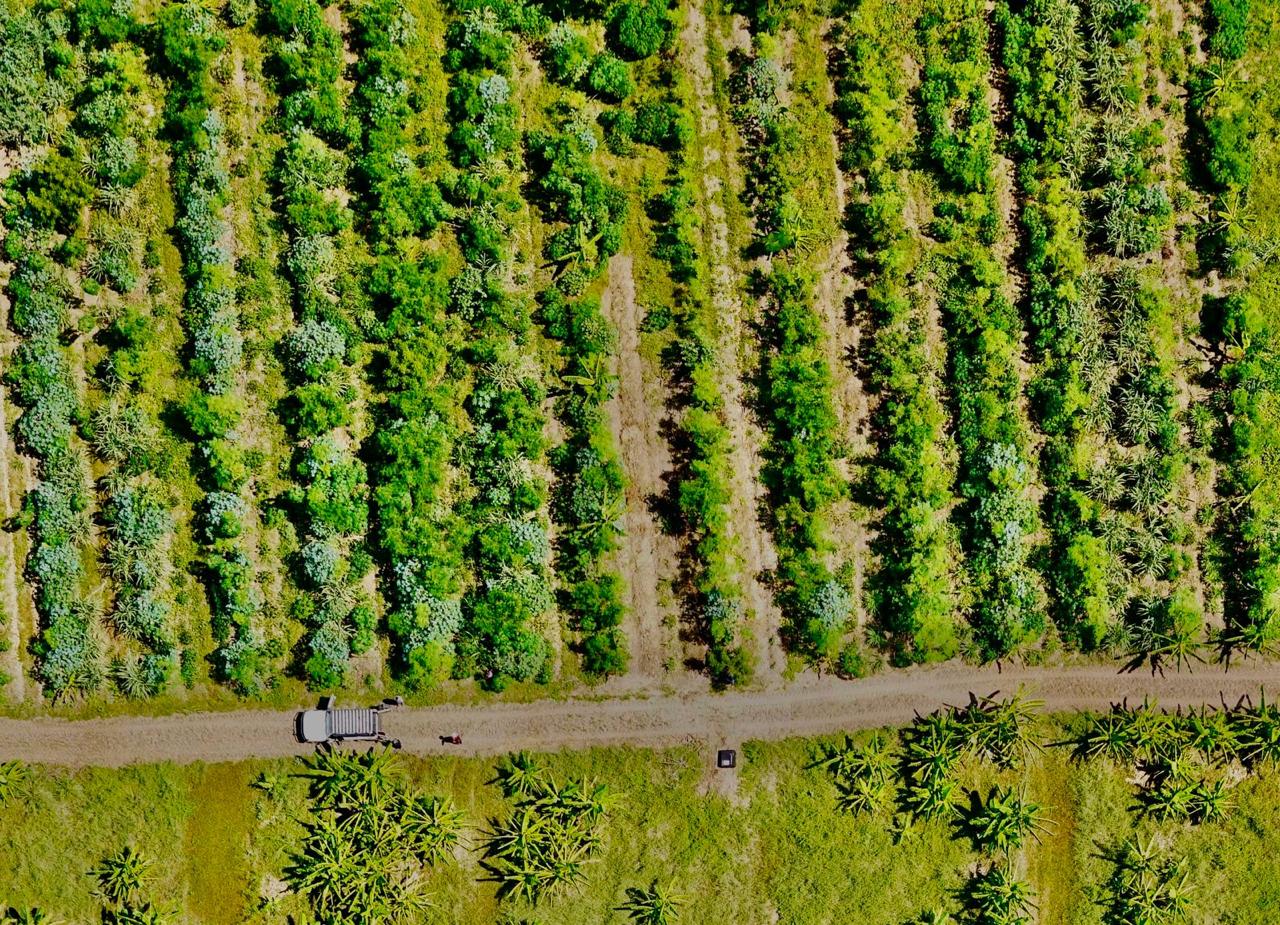
Rather than prescribing a single production model, Abundant Farming brings together different techniques, crops and productive arrangements and adapts them to local conditions.
That distinction is important in a country as geographically and socially diverse as Angola.
Family farming is central to Angola's food system, but farmers face persistent constraints around access to credit, technical assistance, agricultural inputs, infrastructure and markets. Conventional production systems can also be poorly adapted to local environmental conditions and contribute to declining soil quality and increasing degradation.
The response cannot simply be to introduce a new crop or prescribe the same farming system across the country.
A farming family has its own food requirements, available labour, access to water, land characteristics, income needs and market opportunities. The surrounding landscape has its own climate, soils and ecological conditions.
Abundant Farming starts there.
The Agroecological System in Mazozo combines agroforestry, biomass production and diversified food crops, with species selected for different productive and ecological functions. Maize, beans, groundnuts, cowpea, sunflower, sesame, sorghum and millet were combined with biomass-producing species and fruit trees. The system also incorporated soil-cover practices, biological fertilisation and different production cycles.
Approximately 50 species were established in the system, contributing to its diversified productive and ecological functions.
The objective is not to maximise a single output.
It is to create a productive system in which food, biomass, soil fertility, biodiversity and household income can support one another.
Mazozo has become a living laboratory for agroecological innovation, where applied research, experimentation, demonstration and training are integrated under real farming conditions, enabling the testing and validation of productive arrangements, the monitoring of results and the transformation of field-generated evidence into practical knowledge for family farming.
The first year of implementation produced more than 4.5 tonnes of food, enough to meet the estimated nutritional needs of a five-person household, with additional production available for sale or local exchange.
Soil analysis recorded 8.48% organic matter in the top 20 cm of soil.
For the environmental assessment, Africa Drone Solutions collected high-resolution LiDAR flight data, while RAMO Earth processed, analysed and validated the environmental data used to estimate above-ground biomass and associated carbon stock.
The assessment estimated 2.56 Mg/ha of above-ground biomass, with 5.43 tCO₂eq/ha of carbon stock equivalent derived from the conversion of the total estimated biomass.
The above-ground biomass was estimated using a canopy-height model derived from the LiDAR data. Below-ground biomass was calculated as a proportion of above-ground biomass and was therefore not directly measured in the field.
These results represent an initial assessment rather than a measurement of carbon sequestration over time. Further assessments at different points in time would be required to determine changes in biomass and associated carbon stocks.
For RAMO, the role is to help make environmental changes measurable and useful for the people making decisions about land.
The ambition is not to replicate one farm. It is to build the knowledge and capacity for more resilient and regenerative agricultural systems across Angola.
The experience in Mazozo has since contributed to further applications of the approach.
In December 2025, the experience was adapted in Cabinda through the “Água é Vida” – Phase II project.
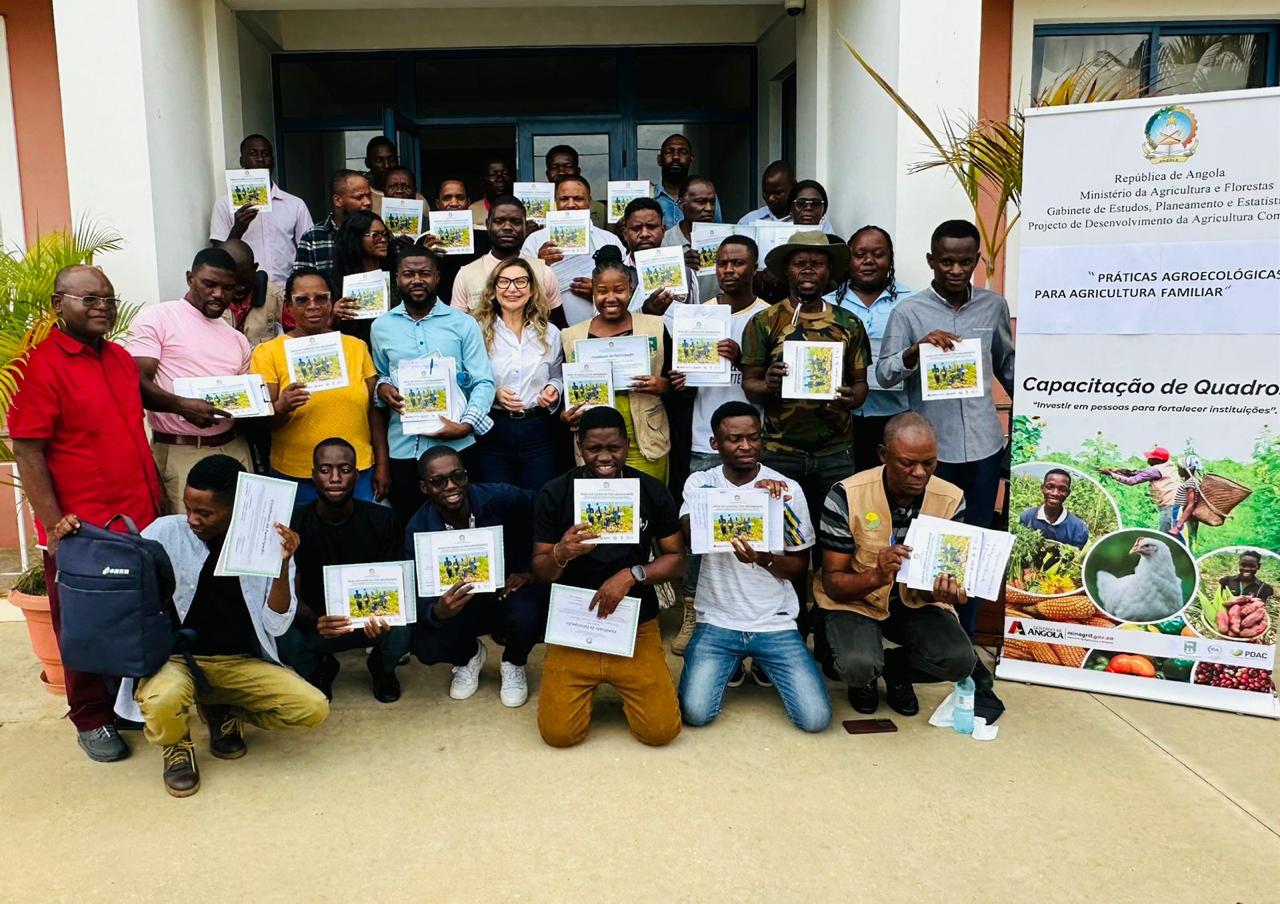
From 16 to 20 March 2026, the Instituto de Investigação Agronómica's Experimental Station in Mazozo also hosted its first agroecological training, involving 31 technical staff: 21 from the Institute for Agrarian Development (IDA) and 10 from the Instituto de Investigação Agronómica (IIA).
These initiatives represent early steps in turning the Mazozo experience into technical knowledge, institutional capacity and approaches that can be adapted to other territorial contexts.
Abundant Farming is a sustainable, intensive agricultural production system based on an agroecological approach, adapting farming practices to the environmental, social and productive conditions of each territory and farming family. Rather than applying a single, fixed agricultural model, it integrates diverse crops, techniques and productive arrangements.
The pilot was implemented at the Instituto de Investigação Agronómica's Experimental Station in Mazozo, Icolo e Bengo Province, Angola, across approximately 5,760 m².
The system produced more than 4.5 tonnes of food during its first year, enough to meet the estimated nutritional needs of a five-person household, with additional production available for sale or local exchange.
The approach combines diversified food production with soil management, biomass production and ecological practices adapted to local conditions. The Mazozo pilot was designed around food security, rural income generation and climate resilience.
Africa Drone Solutions collected the high-resolution LiDAR flight data, while RAMO Earth processed, analysed and validated the environmental data. This enabled the estimation of above-ground biomass and associated carbon stock in the Mazozo agroforestry system.
The assessment estimated 2.56 Mg/ha of above-ground biomass, with 5.43 tCO₂eq/ha of carbon stock equivalent derived from the conversion of the total estimated biomass.
Yes. The approach is designed to be scalable and adaptable across Angola.
As a sustainable and intensive agricultural production system, it can be adapted to the needs and priorities of smallholder farmers and to the specific biomes and agroecological conditions of each territory.
Rather than applying a fixed model, the approach maintains its core agroecological principles while adapting crops, techniques and productive arrangements to local conditions.
The proposed national strategy aims to scale this approach through IDA extension agents across all 21 provinces, creating a pathway for wider adoption of productive, resilient and sustainable farming systems throughout Angola.


